
Life is full of uncertainties and emergencies can happen anytime. And although it is impossible to predict when disaster will strike, we can still prepare for it financially by setting up an emergency fund.
For self-employed professionals, emergency savings are not only about covering personal bills. They also help protect cash flow, tax savings, business expenses, and long-term financial plans. Because 1099 income can change from month to month, your emergency fund should fit how you actually earn, spend, and pay taxes.
What Are Emergency Funds?
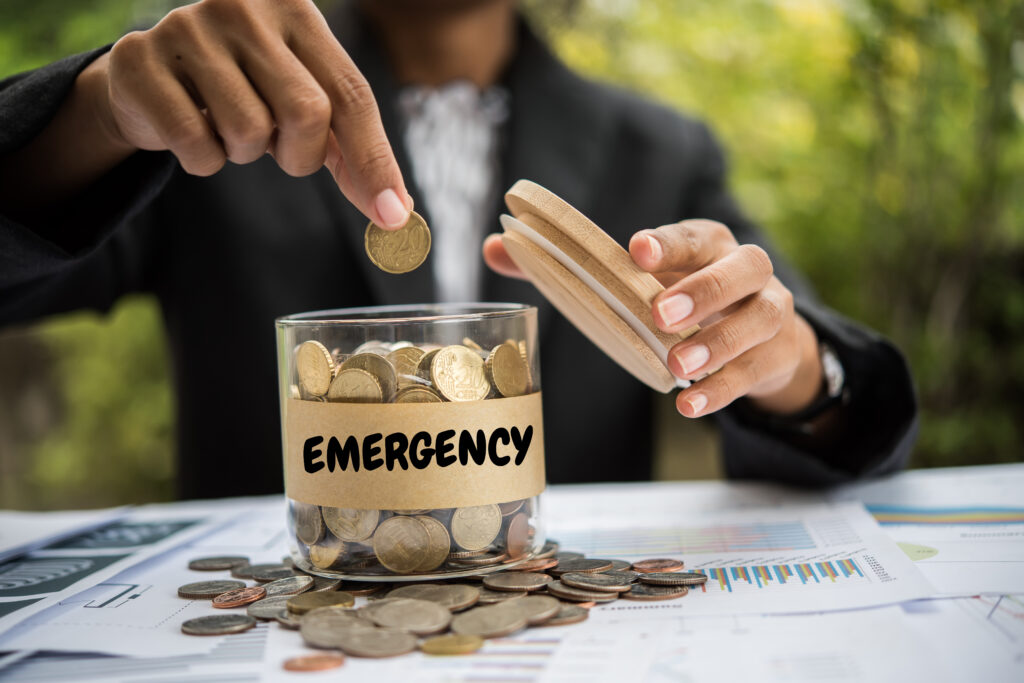
Emergency funds are separate savings set aside for unexpected expenses. These funds can help cover medical costs, car repairs, family needs, income gaps, or business interruptions.
For 1099 contractors, emergency money may also help during slow client months, delayed payments, contract gaps, or temporary breaks between assignments. This is especially important because self-employed professionals often do not have the same predictable paycheck as W-2 employees.
The CFPB guide to building an emergency fund explains that a dedicated savings or emergency fund can help protect people from unexpected financial emergencies and is one of the first steps toward saving.
Why Emergency Funds Matter More for 1099 Contractors
W-2 employees may have steadier paychecks. In contrast, 1099 contractors often deal with variable income.
An independent contractor, CRNA, locum tenens provider, nurse practitioner, or healthcare contractor may earn strong income overall, but timing still matters. One month may include several payments. Another month may include a delayed invoice, a contract gap, or higher travel costs.
Emergency savings can help prevent tax money from being used for personal expenses. They can also support estimated taxes, insurance premiums, licensing fees, bookkeeping, software, and other business expenses.
For 1099 professionals, emergency funds are part of a larger financial system. They help protect both the household and the business.
How Much Should an Emergency Fund Be?
Many personal finance guides use three to six months’ worth of living expenses as a general rule of thumb. However, the right emergency fund amount for a 1099 contractor may need to be higher because income can vary.
A W-2 employee may calculate emergency savings based mainly on household expenses. A 1099 contractor should also consider taxes, business overhead, insurance, licensing, and contract gaps.
So, how much should an emergency fund be? The better answer is: enough to cover your personal needs, protect your tax savings, and keep your business stable during slower months.
Start With Personal Living Expenses
First, calculate your personal monthly living expenses. These include housing, meals, utilities, insurance, vehicle, childcare or family needs, debt payments, and health-related costs.
This gives you a starting point. For example, if your household needs $5,000 per month, three months of living expenses would be $15,000. Six months would be $30,000.
However, for self-employed professionals, this is only the personal side of the calculation.
Add Business and Tax-Related Costs
Next, add business and tax-related costs. These may include estimated tax payments, professional licenses, malpractice insurance, bookkeeping and tax preparation, software subscriptions, continuing education, travel costs, business bank fees, or payroll fees.
This step matters because tax savings should not be treated as emergency savings. Tax money is already spoken for. For more detail, review our guide on estimated tax payments for self-employed individuals.
Emergency Fund Amount for CRNAs and Locum Tenens Providers

CRNAs and locum tenens providers may have high income, but payment timing can still be irregular. A larger reserve may be helpful when switching contracts, traveling between assignments, waiting for credentialing, or working across multiple states.
Locum providers may also need emergency money for travel, housing, licensing, and state tax obligations. These costs can appear before income from a new assignment arrives.
For providers with changing assignments or multi-state income, emergency savings should connect with broader locum tenens financial planning.
CRNAs with S-Corps may also need to plan payroll, distributions, and business cash flow. In that case, emergency funds should support both personal expenses and business operations.
Where Should You Keep Emergency Money?
Emergency money should be accessible. A separate savings account or money market account can help prevent accidental spending while still keeping funds available when needed.
Avoid placing emergency funds in accounts that are too volatile or hard to access. A retirement account is usually not ideal for emergency savings because it is meant for long-term goals and may have tax or penalty consequences if used early.
If you keep emergency money at a bank, it helps to understand deposit protection. The FDIC deposit insurance guidance states that the standard insurance amount is $250,000 per depositor, per FDIC-insured bank, per ownership category.
Separate Emergency Savings From Tax Savings
Emergency savings and tax savings should not be the same bucket.
Tax money is already assigned to future payments. If it gets used for personal emergencies, the next estimated tax deadline may create cash flow stress. The IRS estimated tax payment guidance explains how taxpayers generally make estimated tax payments throughout the year.
Ideally, 1099 contractors should separate four buckets: a personal emergency fund, a business emergency fund, estimated tax savings, and retirement savings.
This separation makes cash flow easier to manage. It also helps prevent one financial goal from disrupting another.
How to Build Emergency Funds Faster

Start with a clear savings goal. Then create a system that helps you save consistently.
The CFPB recommends setting a specific savings goal and using consistent contributions, including automatic recurring transfers. For 1099 contractors, this may mean saving a percentage of each payment instead of waiting to see what is left at the end of the month.
You can also direct part of each contract payment into savings, reduce nonessential expenses temporarily, use refunds or bonuses, and review spending monthly.
Use a Percentage-Based System
A percentage-based system can work well for 1099 income because payments may not arrive on a fixed schedule.
Instead of saving only what remains after spending, assign each payment a purpose. For example, set aside a percentage for taxes, emergency savings, retirement, business expenses, and personal income.
Need Help Creating a Financial System for 1099 Income?
If you are a CRNA, locum tenens provider, nurse practitioner, or 1099 contractor, your emergency fund should support more than personal expenses. It should also work with your tax planning, bookkeeping, business expenses, and long-term financial goals.
1099 Accountant helps self-employed professionals organize their books, review cash flow, plan estimated tax payments, and build stronger financial systems around 1099 income. Schedule a consultation or contact us at (855)529-1099.